Blog
The Campaign Process: From Brief to Contract
October 7, 2024
Understanding the campaign process is essential for agencies and in-house teams. From selecting the right brief to securing contracts, every department plays a critical role. This article explores the key stages of the creative journey, highlighting successes, challenges, and actionable steps to improve future outcomes.
Introduction
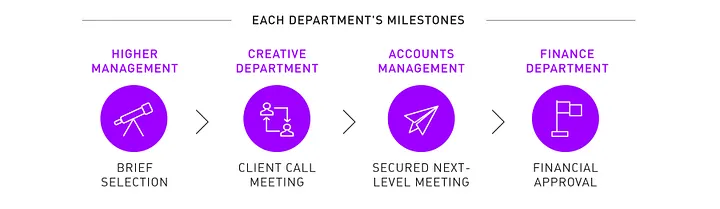
In any campaign process, teamwork is crucial, but success is not solely dependent on collaboration. Each department plays a vital role, with individual successes and challenges that impact the final outcome. From management selecting the right brief to finance justifying the budget, every step matters. Here’s a breakdown of each stage in the process and how each department can contribute to successful contracts.
1. Management: Choosing the Right Briefs
Management must assess the brief carefully, ensuring it aligns with the agency’s strengths, workload capacity, and the client’s openness to new ideas.
Success:
Identifying briefs that match your agency’s expertise and client expectations.
Failure:
Being used as a backup vendor or failing to recognize client favouritism.
Challenges:
Missing red flags about client preferences or hidden agendas.
Key Milestones:
- Brief Selection
- Strength Assessment
- Workload Evaluation
- Client Openness
Key Milestones:
- Brief Selection
- Strength Assessment
- Workload Evaluation
- Client Openness

2. Creative: Grasping the Brief
The creative department’s role is to fully understand the brief and translate it into solutions that resonate with the client.
Success:
Delivering creative solutions that meet the client’s needs and prompt further discussions.
Failure:
No follow-up from the client, indicating a lack of engagement with the creative pitch.
Challenges:
Misinterpreted briefs, over-budget ideas, or a poor agency reputation.
Key Milestones:
- Needs Understanding
- Idea Translation
- Solution Development
- Client Call Meeting

3. Accounts: Pitching with Precision
The accounts team is crucial in selling the creative output, ensuring that the client is convinced and ready to move forward.
Success:
Convincing the client, leading to higher-level meetings and discussions.
Failure:
Miscommunication or inability to explain the creative rationale properly.
Challenges:
Poor attitude, lack of technical understanding, or failure to engage the client effectively.
Key Milestones:
- Clear Communication
- Engaging Presentations
- Meeting Arrangements
- Secured Next-Level Meeting

4. Finance: Budgeting Smartly
Finance teams are responsible for creating a budget that aligns with the client’s expectations and the agency’s strengths.
Success:
Presenting a well-structured budget that is approved by procurement, moving the project forward.
Failure:
Budget deemed too high or too low, leading to client rejection or concerns.
Challenges:
Poor market research, unprofessional cost layouts, or misaligned budget expectations.
Key Milestones:
- Budget Justification
- Cost Negotiation
- Financial Approval

Conclusion:
Success in the creative process is a combination of teamwork and individual accountability. Each department must navigate its own milestones to push the project forward. Whether it’s choosing the right brief, delivering a winning pitch, or securing financial approval, every step counts. By understanding each department’s role and challenges, agencies can improve their processes and secure more successful contracts in the future.